
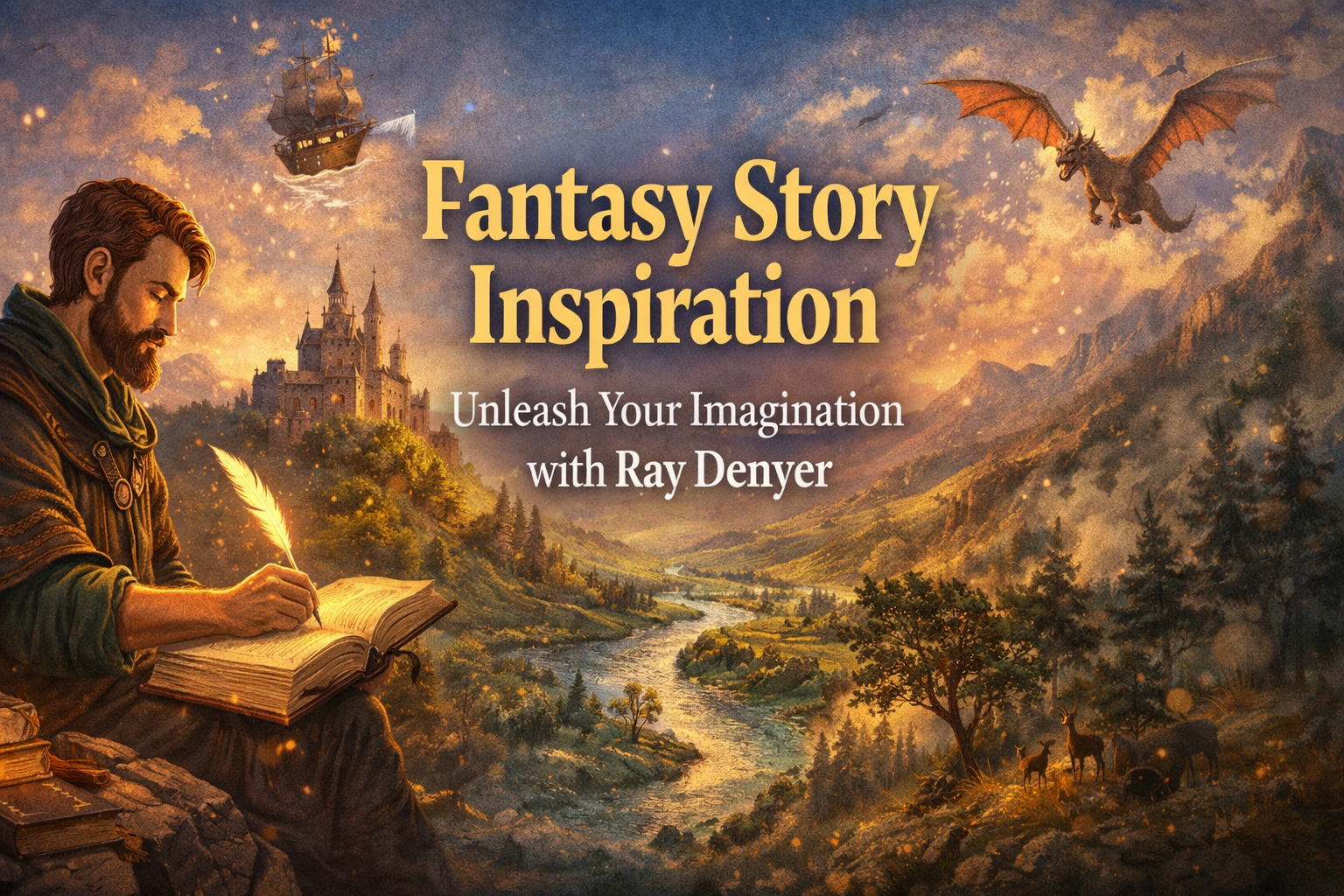
Fantasy story inspiration often begins with imagination and curiosity. In Algernon Breadstick: The Hapless Knight by Ray Denyer, readers follow dreamer Algernon, who aspires to become a knight despite many setbacks. Through mishaps like a disastrous tournament and an unusual hunt for the Loch Ness Monster, the story becomes a perfect example of how fantasy story inspiration can turn ordinary ideas into extraordinary adventures.
Connecting the Book’s Genre with Ray Denyer’s Fantasy Writing Tips
“Algernon Breadstick: The Hapless Knight“ is a prime example of fantasy story inspiration—a genre that delights in imagination, humour, and the pursuit of unlikely dreams. This story aligns closely with several of Ray Denyer’s tips for writing fantasy, as outlined below:
Today, I’ll give you 6 tips on fantasy story inspiration. The fantasy genre plays a large role in my life. I fell in love with literature while reading Harry Potter and the Philosopher’s Stone (and waiting for my Hogwarts letter). I’ve met friends thanks to conversations about The Lord of the Rings. I’ve enjoyed every moment when fictional friends like the Losers from It faced the monster. I’ve watched the sunrise and wondered if that’s what it would look like in Middle-earth.
Fantasyoffers me freedom and endless creativity. So here are tips—born from my own failed castles—on sparking fantasy inspiration.
My main message is that fantasy can empower you to explore your imagination and realise your dreams. I hope these tips help you write stories that are as magical and limitless as your imagination allows.
Although many people think that the fantasy genre is just escapism, in most great stories, we find morals that can be applied to our lives. The Lord of the Rings isn’t just about destroying the One Ring; it’s also a story of friendship, power, hatred, hope, and overcoming adversity. These are themes in our lives. Okay, we don’t have elves and dwarves around us, but there are still points that can be extrapolated. So live your life, don’t limit yourself, seek everything that can be sought, learn, enjoy, cry, suffer, change, play, love, read, see, listen, breathe, dream, imagine… Often, advice for writing fantasy is limited to telling you to write and live through words, but often, life itself can be a good story to turn into a fantastic work.
For your fantasy story inspiration, genre has many masterful authors: Tolkien, Stephen King, C. S. Lewis, George R. R. Martin, Neil Gaiman, J. K. Rowling, Ray Bradbury, Joe Abercrombie, and Lovecraft… Sometimes, it’s even difficult to define which author has written fantasy and which hasn’t, but you also delve into pulp fiction and other very interesting movements with people like Robert E. Howard. It’s good to get to know your fellow writers and learn a lot from them, both from what you’d like to be and from what you don’t.
One of your biggest challenges will be resisting stereotypes: evil villains, pure heroes, or simple objects of power. Those are easy—many stories use them—but look for something unique. What if evil wins? What if there’s no evil? Heroes as orcs and villains as elves? Magic in a city like Berlin? Fantasy is about pondering the impossible, so don’t follow the beaten path. Create your own!
Fantasy can be real, and reality can be fantastic. In recent years, dark fantasy has experienced a spectacular boom thanks to authors like George R. R. Martin and Joe Abercrombie. Don’t expect fairy tales with happy endings, no. Expect betrayal, blood, death, power, and did I mention blood? It’s a fantastical world with dragons and elven ruins, but also slavery, tyrannical kings, and the absence of a great Dark Lord… everyone is vile. Don’t be afraid to write a story like this, or the complete opposite if you wish, just as you might prefer to set your adventure in your own city instead of a fantasy world.
The fantasy story’s inspiration, whether set in our reality or in Narnia, has several unique characteristics. It’s not mere decoration. Many authors spend years creating languages, maps, kingdoms, histories, legends, and other elements for places that have never existed beyond their imagination. Each author must decide the level of detail they want to bring to life in their story without falling into the trap of including millions of irrelevant facts. And here comes the dreaded piece of advice: rewrite as many times as necessary, even if you fall into an endless loop.
In addition to worldbuilding, it’s helpful to write down your ideas whenever inspiration strikes. I think fantasy writers often have rather strange ideas that, sometimes, we simply discard… and, on other occasions, we can’t help but think of them. It happened to me when I started imagining a secondhand shop whose artefacts, instead of being ordinary and commonplace, were magical. I didn’t start writing immediately, but later I imagined more and more around it. That’s how Devon Crawford and the Guardians of Infinity, my first purely fantasy novel (albeit of the urban fantasy variety), came about. Often, we have strange ideas or curious facts that catch our attention. I’m all for jotting down those ideas because they might come in handy in your work at some point, even when you least expect them.
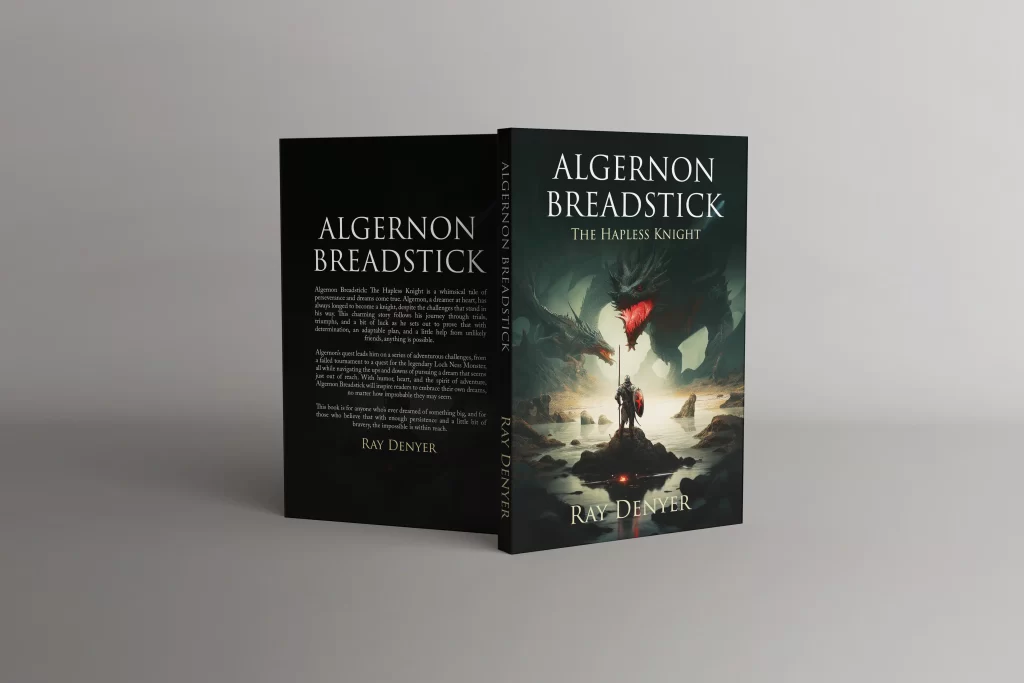
Plots tend to repeat themselves. We have thousands of years of stories. Everything can sound familiar. So, how do you make a story original? The way you tell it is important, as is your perspective. That’s why, while I’m in favour of jotting down ideas about where your story should go, I also think it’s good to stop and improvise as you go.
For me, when the characters speak for themselves, and I simply write, when I notice they have a life of their own, it’s wonderful, and if they want to go one way or another, I let them. What makes my stories mine, and that shouldn’t be sacrificed: your own voice, whether you write fantasy or any other genre.
In summary, the genre and themes in this book serve as a clear, practical illustration of Ray Denyer’s core advice for crafting memorable fantasy stories.
One Response